Optimise Your Operations with a Modern CRM Comparison to Find the Best CRM System
Every industry has its own unique challenges, but they all share one major goal, which is keeping customers happy. If your team is using most of their time looking into disorganized files and email trails rather than communicating with your customers, you need to reconsider. While you try to understand terms such as 'data-siloing,' 'omnichannel pipelines,' and ' predictive algorithms, ' wonder about the following question: "How will it help the team to close sales deals without losing your mind?"
But there comes the catch. Entering the software market is not an easy task. If people want to buy a CRM system, they would realize the fact that all systems are different. In fact, there are four distinct types of CRM software, each designed to solve specific business challenges.
In this complete CRM comparison guide, we will break down the four main types of CRMs, how to choose the right one, and the key features you need. Whether you are hunting for an enterprise powerhouse or a simple CRM for small business, this guide has you covered.
Find the Perfect Match by Exploring the 4 Main Types of CRM Systems
When people talk about a CRM, they are usually referring to software that manages customer relationships. However, under the hood, these systems are categorized into four main types based on their primary function:
-
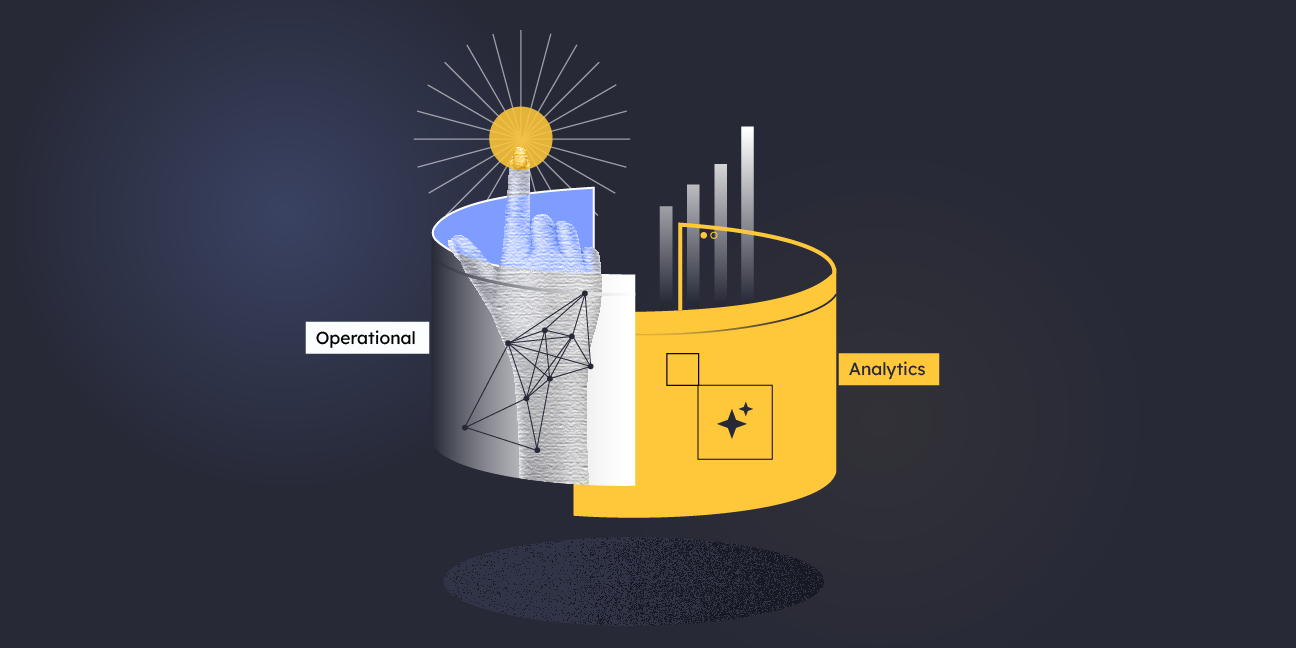
Operational CRM: When your sales, marketing, or service teams dedicate half of their day to manual data entry, email follow-ups, and the kind of routine activities, an Operational CRM is what you need. This kind of CRM system streamlines the daily operations in a business's sales, marketing, and service. It takes care of the nitty-gritty tasks, so your team can invest their energy in engaging clients and losing deals. Any business that would like to increase efficiency and cut down on manual error will definitely benefit from an Operational CRM.
-
Analytical CRM: Data is completely useless if your team doesn't know what it actually means or how to apply it. An Analytical CRM takes the massive amounts of customer data you collect and turns it into actionable, easy-to-read insights. It thoroughly analyses customer behaviour, purchase history, and campaign engagement to help you forecast trends and make smarter decisions. This is the perfect fit for data-heavy organizations wanting to understand customer retention and run highly targeted marketing campaigns.
-
Collaborative CRM: Ever made a customer support call and had to explain your issues to three separate individuals? The answer to that issue would be Collaborative CRM, an effective solution that breaks the barriers between departments such as sales, marketing, and customer service. In other words, it guarantees that all individuals always have access to the very same customer information in real time. This way you can ensure perfect unification and seamless customer experience in your multi-department company.
-
Strategic CRM: Operational CRMs are used to manage day-to-day processes, but the Strategic CRM concentrates on playing the long game. In other words, the fourth type of CRM is focused on establishing long-lasting and highly customized relationships with your most valuable customers. It allows creating the maximum CLTV (Customer Lifetime Value) through highly personalized interaction based on valuable insights. Companies that value the long-term relationship with their clients rather than transactional sales are going to succeed with this type of CRM.
| CRM Type | Core Focus | Who Uses It Most | Primary Benefit |
|---|---|---|---|
| Operational | Process automation | Sales & Service Teams | Eliminates manual data entry and repetitive tasks. |
| Analytical | Data insights & forecasting | Leadership & Analysts | Turns raw customer data into actionable business trends. |
| Collaborative | Communication sharing | Entire Organization | Breaks down data silos between departments. |
| Strategic | Long-term relationship building | Account Managers | Increases customer retention and lifetime value. |
Key Variations Between a B2B CRM and a B2C CRM for Your Business
Your particular business model determines the type of software architecture you would need.
-
B2B (Business-to-Business) CRM: Selling to another business is a race in which you have to involve various decision makers and nurture the relationship. B2B CRM software designed for this purpose should include excellent lead management, organization hierarchy, and pipeline tracking because of the long sales cycle involved in the process. Moreover, your CRM software should be well integrated with business emails and proposal tools in order to keep the deal running. This special software architecture is a must-have if your business is focused on large contracts.
-
B2C (Business-to-Consumer) CRM: Selling directly to consumers is a rapid environment involving numerous transactions and emotionally driven purchasing decisions. In order to succeed in such a sphere, you should use B2C CRM software, which is focused on mass marketing automation, customer segmentation, and loyalty programs. It also prioritizes lightning-fast customer support across multiple channels like social media, live chat, and email. Businesses dealing with high volumes of individual buyers need this setup to keep their audience continuously engaged.
Key CRM Features to Consider
Regardless of your preferred approach, your CRM software will ultimately serve one purpose to simplify your life. Here are some basic but essential functions that every CRM should include.
-
Contact and Lead Management: Also known as your digital address book, perhaps the most fundamental CRM feature, contact and lead management stores the names, emails, interaction history, and social profiles for all of your contacts. This is a vital function that ensures leads aren't falling through the cracks, keeps the entire team in sync, and offers clarity in the process of understanding the buyer's journey.
-
Workflow Automation: This amazing functionality allows you to automate the performance of repetitive tasks right behind the scenes without any additional efforts from your side. Whatever the task is, whether it's sending an email to the client, changing deal statuses, or assigning new leads, automation takes care of the whole thing. This way, human mistakes are excluded, and salespeople can use their precious time talking to potential clients.
-
Customizable Dashboard: One of the most important things is to see the main metrics at one simple glance without any extra efforts required. A good dashboard should present your sales goals, pipeline value, or unresolved tickets in graphical form. This way, managers can easily spot some weaknesses and change their strategy in time before small problems turn into big ones.
-
Mobile Functionality: Nowadays, a good sales team needs to have the option to update deals and check the history of clients right on the spot. For that reason, it is crucial to have a very responsive mobile application that will help to close deals anywhere except for an office setting.
How to Choose CRM Software That Perfectly Aligns With Your Daily Operations
Selecting the right platform doesn't have to be a headache if you follow a strategic process:
-
Identify Your Biggest Pain Point: Begin by analyzing where exactly your existing processes fall short and what frustrates you the most. Are you missing out on deals, or are there serious misalignments between your marketing and sales departments? These will automatically point to whether you need an Operational or Collaborative tool. Let your actual business challenges dictate the software you buy, rather than getting distracted by flashy features.
-
Your Team's Technical Capability: You shouldn't purchase a complicated enterprise solution when you only need a simple CRM for small business. User adoption is the number one reason CRM implementations fail, which means the platform needs to be user-friendly and easy to understand. If the software is too difficult to navigate, your team will simply go back to using their old spreadsheets.
-
Estimate Your Budget: When calculating costs, you must factor in more than just the advertised monthly subscription price. Remember to account for onboarding fees, premium integrations, and the cost of adding new users as your company scales. Having a clear financial ceiling prevents you from overcommitting to a platform that drains your resources.
Simplify Your Workflows with an All-in-One CRM Solution
The best news in today's software landscape is you rarely have to choose just one type of CRM. The modern ideal of CRM is the all-in-one CRM, which successfully combines operational capabilities, analysis, collaboration and strategy.
Nowadays, instead of having many expensive tools, businesses are adopting unified tools providing a holistic view of their customers. A good example of such development is Twozo, which allows for the creation of a productive and efficient ecosystem from lead generation till customer retention. No matter whether you need heavy tools for operation or you need a simple CRM, with an all-in-one, you will never outgrow your software.
Ready to streamline your sales and build lasting customer loyalty? Sign up for a free trial of Twozo CRM today and experience how simple managing your business relationships can truly be.